
The Assumption of Mary
At the end of her earthly life, Mary was taken up body and soul into heavenly glory. Defined by Pope Pius XII in 1950, but believed and celebrated by the Church for fifteen centuries before that.
How We Came to Know This
Mary’s Assumption is the doctrine the Christian people believed long before the Church formally defined it, a faith handed down East and West, from the earliest centuries.

The Woman Crowned
Revelation 12:1
“A great sign appeared in heaven: a woman clothed with the sun, with the moon under her feet, and on her head a crown of twelve stars.” The Church reads this woman as the New Eve, Mary, glorified in heaven.

The Dormition
5th century onwards, Christian East
The Eastern Churches kept the feast of Koimesis, the “Falling Asleep” of Mary, from at least the 5th century. The icon shows Christ holding His Mother’s soul, surrounded by the apostles. East and West share this faith.
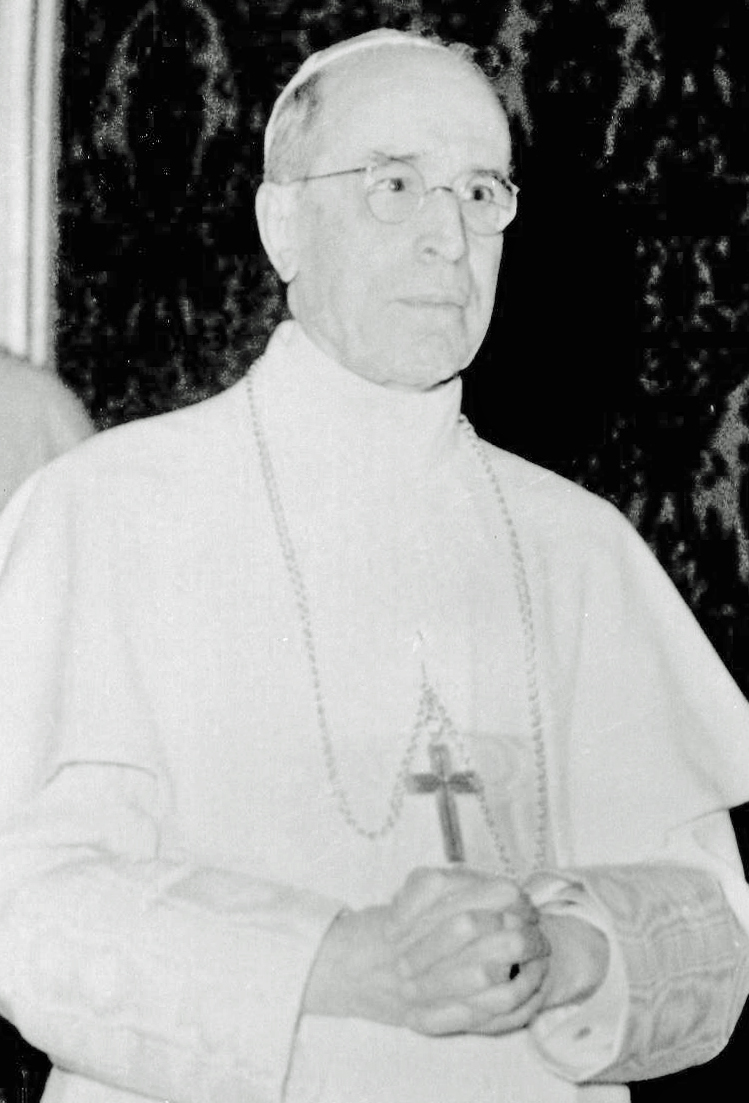
Pope Pius XII
1 November 1950, Munificentissimus Deus
After eight million Catholics signed petitions across decades requesting a definition, Pius XII formally proclaimed: “The Immaculate Mother of God, the ever-Virgin Mary, having completed the course of her earthly life, was assumed body and soul into heavenly glory.”
The Solemnity
August 15, across the universal Church
The Solemnity of the Assumption is a Holy Day of Obligation. Across two thousand years and every continent, on August 15 the Christian people raise their eyes to a Mother who is not in a tomb but in glory, the first member of the Church to share fully in her Son’s resurrection.
What the Definition Does and Does Not Say
The Church carefully chose her words. The definition does not say whether Mary died first and was then taken up, or whether she was assumed without dying. The Eastern tradition speaks of her Dormition, her falling asleep, then her body taken from the tomb. Western tradition often left the question open.
What the doctrine does affirm is the heart of the matter: at the end of her earthly life, Mary’s body did not undergo decay. She was taken into heaven body and soul, where she now shares fully in her Son’s glory.
This is also a sign for us. What happened to Mary is what the whole Church awaits: “the resurrection of the body, and life everlasting.” She has gone before us; we follow.
Voices on the Assumption
“God’s Warrior Queen”, Bishop Robert Barron, Word on Fire
“Mary is the New Ark”, Fr. Mike Schmitz, Ascension Presents
The Virgin Mary is taken up to the heavenly bridal chamber, where the King of kings sits on his starry throne. Alleluia.
, from the Magnificat antiphon for the Solemnity of the Assumption