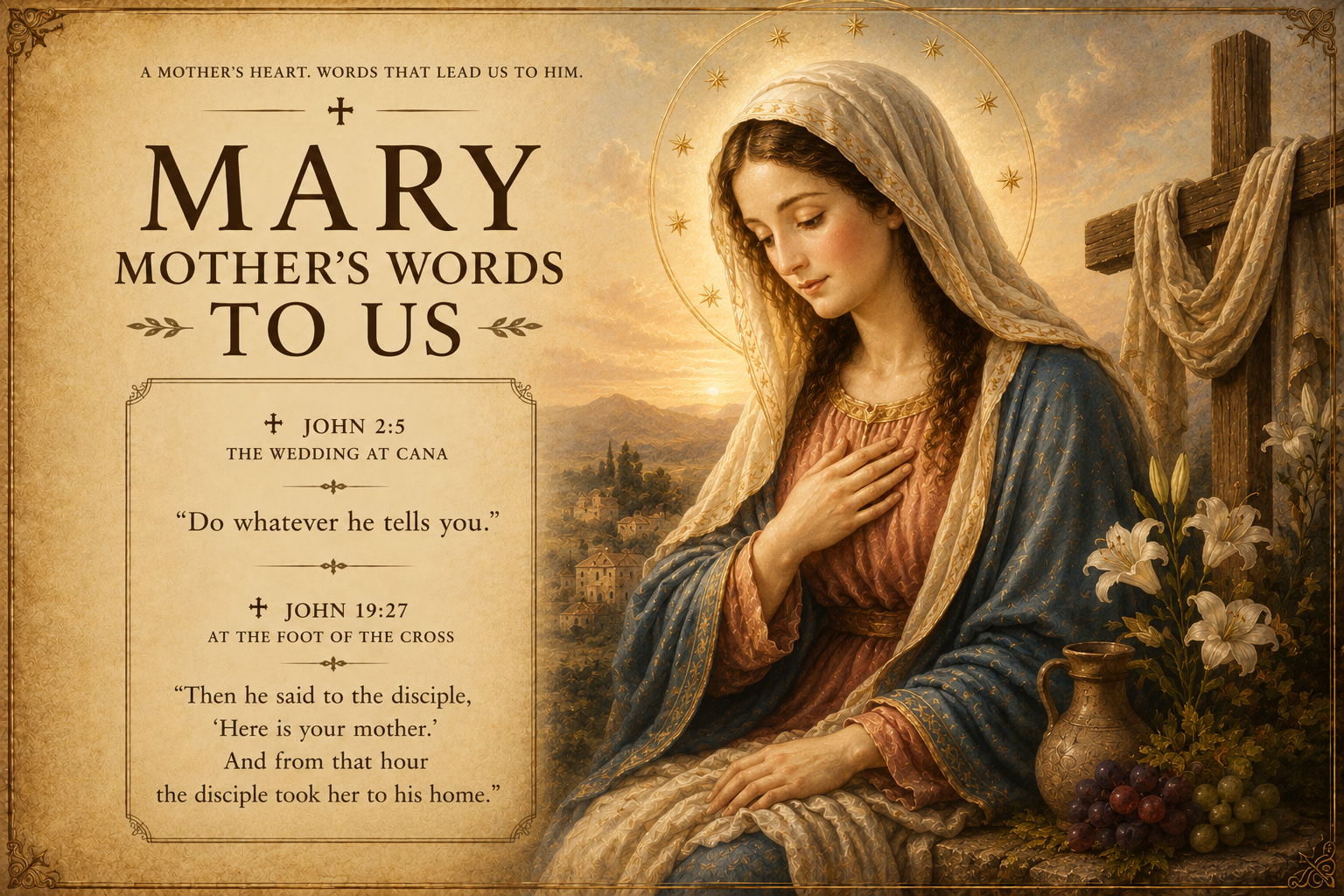
In December of 1531, a poor indigenous farmer climbed a small hill outside what is now Mexico City and met a woman who told him she was his mother. She spoke to him in his own language, called him by an affectionate diminutive, and asked him to take a message to the bishop. The image she left behind that morning has been kept and looked at and loved without interruption ever since. Almost five hundred years later, more people pray before it each year than before any other Marian image in the world.
Where she said it
Tepeyac is a small hill at the northern edge of what was once the Aztec capital, Tenochtitlán. By 1531 the city had fallen to the Spanish a decade earlier. The whole of central Mexico was in shock. Temples had been pulled down. Whole peoples, who had been told that the gods who had carried them for centuries were no gods at all, were trying to understand who they now were. The new Spanish missionaries had baptised hundreds of thousands and made very few real disciples. The wound between conqueror and conquered ran through every village.
Juan Diego Cuauhtlatoatzin was fifty-seven years old, a widower, a Chichimec Aztec of the small village of Cuautitlán. He had been baptised a few years earlier. He walked the long road to Mass each Saturday, before dawn, the seven miles or so into the city. On the morning of 9 December 1531 he stopped at the hill of Tepeyac, having heard, he later said, the sound of singing such as he had never heard, and the singing stopped, and the Lady was there.
She was a young woman, with the features of his own people, wrapped in a star-strewn mantle, the colour of the Mexican sky just before dawn. She spoke to him in Nahuatl, his mother tongue. She called him Juanito, my little Juan, my littlest son. She told him to go to the bishop in the city and ask that a chapel be built on the hill, so that all of her children, suffering and lost, could come there and be heard. He went.
The bishop did not believe him. The Lady sent him a second time. The bishop asked for a sign. The Lady promised one. Then Juan Diego’s uncle fell desperately ill, and Juan, ashamed and afraid, took a longer way around the hill the next morning to avoid the Lady, because he had no time for a sign while his uncle was dying. She met him on the longer way. And on that morning, 12 December 1531, she spoke the words that all of Mexico has remembered since.
What she said
Across the four meetings, Mary spoke to Juan Diego at length. The whole account, preserved in the sixteenth-century Nahuatl text known as the Nican Mopohua, is one of the longest records we have of her words in any apparition. The phrases below are among the most loved.
At the first meeting, on 9 December, she introduced herself with full dignity, in his own language.
Know, my dearest son, that I am the ever perfect Holy Mary, Mother of the true God, the Author of life, the Creator of all things, the Lord of heaven and earth, who is everywhere.
9 December 1531
And she told him what she wanted, and why.
I greatly desire that a temple be built for me here, so that in it I can show and offer all my love, my compassion, my help and my protection to the people. I am your merciful Mother, the Mother of all who live united in this land, and of all mankind, of all those who love me, of those who cry to me, of those who seek me, of those who have confidence in me. Here I will hear their weeping and their sorrow. I will remedy and alleviate all their many sufferings, necessities, and misfortunes.
9 December 1531
At the second meeting, on 10 December, when Juan Diego came back ashamed because the bishop had not believed him, she answered him with characteristic patience.
Listen, the least of my sons. You must understand that I have many servants and messengers whom I could charge with this errand. But it is altogether necessary that you yourself plead my cause, and that through your mediation my will should be fulfilled.
10 December 1531
At the fourth meeting, on 12 December, when Juan Diego was creeping past on the longer path because his uncle was dying, she met him and spoke the words for which she is most loved.
Listen, and let it sink into your heart, my dearest son. Let nothing afflict you, let nothing trouble you, let nothing alter your countenance, your heart. Do not fear any illness or anguish. Am I not here, I who am your mother? Are you not under my shadow and protection? Am I not the source of your joy? Are you not in the folds of my mantle, in the crossing of my arms? Is there anything else you need? Do not let the illness of your uncle worry you, for he will not die of his sickness; be assured, he is already cured.
12 December 1531
And at the heart of that whole long passage, the four words that have been carved into the lintels of churches across Latin America for five hundred years.
¿No estoy yo aquí que soy tu madre?
From the Nican Mopohua, the sixteenth-century Nahuatl account
Am I not here, I who am your mother?
What she meant
She had a hundred ways to say it and she chose this one. Not do not worry. Not God is with you. Am I not here, I who am your mother?
It is the kind of sentence a mother says to a frightened child clinging to her skirt. It is the sentence that has nothing in it of doctrine or distance. It is the most maternal line in any apparition of Mary anywhere in the world. And she said it to a man whose people had just been crushed, whose temples had been pulled down, whose gods had failed him, whose uncle was dying, and who was trying to slip past her on the longer path because he was too tired and too ashamed to ask for help.
She did not lecture him. She did not even, at that moment, ask him for anything. She told him she was there. That was the answer. That she, who is the mother of the Lord, was there, on his road, asking only that he know it. Everything else flowed from that.
Then she sent him to gather roses, in December, on a hill that grew only cactus. He found them. He filled his rough cloak, his tilma, with them and carried them down to the bishop. When he opened the cloak and let the roses fall, the bishop fell to his knees. On the inside of the cloak was the image of the Lady as Juan Diego had seen her on the hill, a young indigenous woman, eyes lowered, the star-strewn sky around her, an angel at her feet. The image is still there. The cloak is woven of a cactus fibre that should have rotted in twenty years. It has been venerated, breathed on, lit by candles, photographed, examined under microscopes, for four hundred and ninety-five.
In the nine years that followed, by the records of the Franciscans, more than eight million indigenous people were baptised in Mexico. The image had done what no Spanish sermon could do. She had spoken to them, in their own language, on their own hill, as their own mother.
And as at Pontmain and Lourdes, every part of what she said and did at Tepeyac pointed at her Son. The chapel she asked for was a place for Mass. The image carries the symbol of an unborn child in her womb, the dark ribbon high under her sash, the only place in any approved Marian image where she is seen carrying Him. She did not come to be loved instead of Christ. She came to bring her wounded people to Him.
Voices that came after
In 1945, Pope Pius XII declared Our Lady of Guadalupe the Patroness of all the Americas. In 1999, Pope Saint John Paul II, who had a deep personal devotion to her, named her the Patroness of the Unborn as well, because of the image of the child carried under her sash. He visited the basilica at Tepeyac four times in his pontificate. He once said, in front of the image,
From this place, Mother, you watch over and protect your sons and daughters of the Americas, the children of the New Evangelisation. Through her, faith in Christ became the soul of America.
Saint John Paul II, at the Basilica of Guadalupe, 22 January 1999
And in 2002, the same Pope canonised Juan Diego, the poor farmer to whom she had said the words. Saint Juan Diego is, by the Church’s own reckoning, the first indigenous saint of the Americas. The peasant who had tried to slip past her on a longer path.
Why it still matters
We live in a time that is very alone. People have phones full of contacts and very few mothers in their lives. People carry losses and shame they have never said out loud to anyone, and they do not know where to put them. They keep going. They take the longer way around the hill.
Guadalupe is the answer to this. She did not wait for Juan Diego on the right path. She waited for him on the wrong one, the one he was taking because he was ashamed. She did not let him slip by. She placed herself in his way and said the only sentence he needed to hear that morning.
She is doing it still. To you, today, on whatever path you are walking. Am I not here, I who am your mother? She is there. She is your mother. You are in the folds of her mantle, in the crossing of her arms. There is nothing else you need.
A line to carry into the week
Am I not here, I who am your mother?