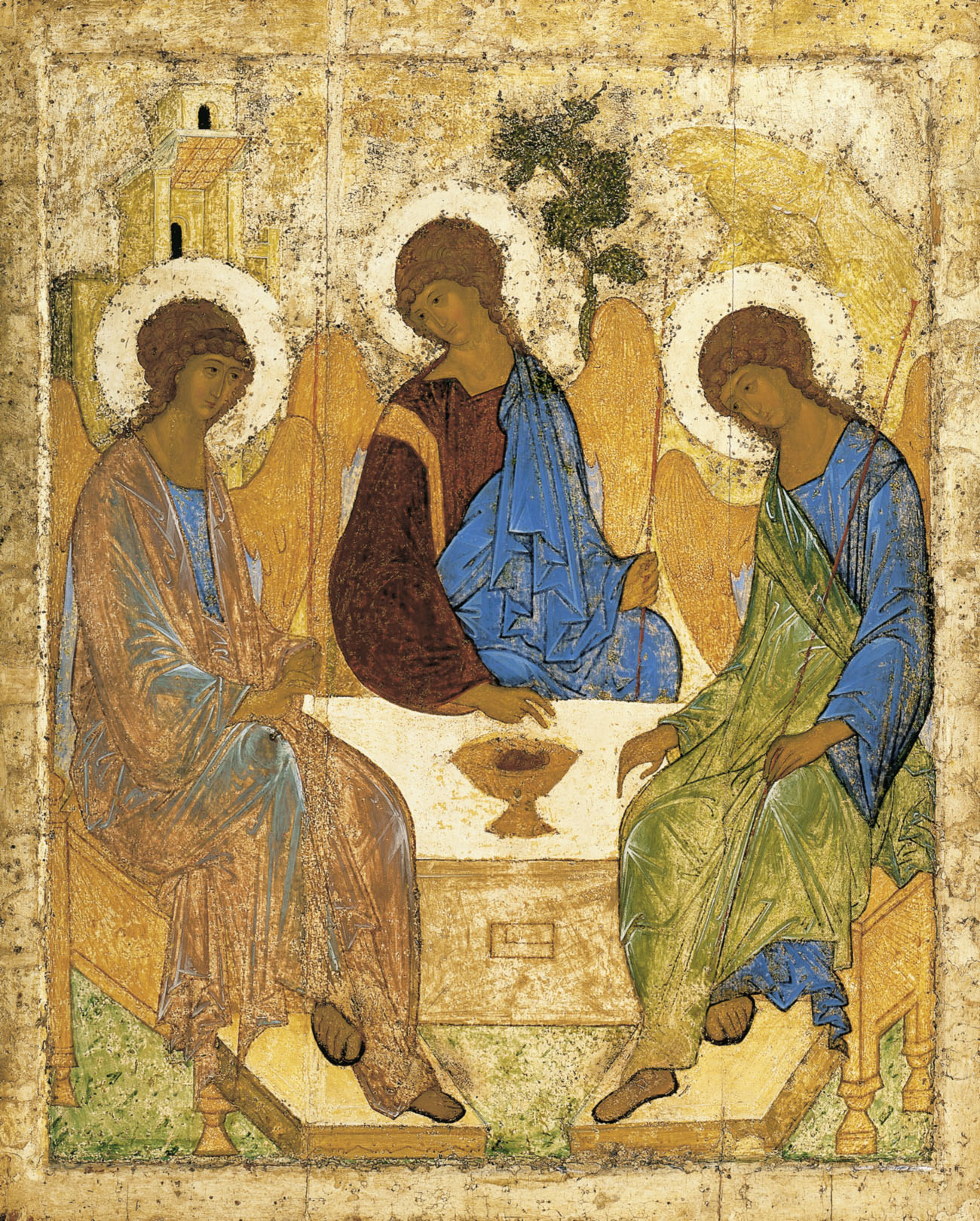
The Glory Be, praise to the Holy Trinity
After every long road of meditation, after every Mystery of the Rosary, after every psalm of the Liturgy of the Hours, at the close of countless Christian prayers, the heart pauses, lifts its head, and gives glory: Glory be to the Father, and to the Son, and to the Holy Spirit. The Glory Be is the smallest doxology of the Christian tradition, and one of the oldest.
How old this prayer is
A doxology, from the Greek doxa, “glory,” and logos, “word”, is a short formula of praise to God. The Christian tradition of ending prayers, psalms, and hymns with a Trinitarian doxology reaches back to the very first centuries. The earliest forms varied: “Glory to the Father through the Son in the Holy Spirit” was common in the East.
During the Arian controversies of the fourth century, the same crisis that produced the Nicene Creed, Saint Basil the Great defended the form “Glory to the Father, and to the Son, and to the Holy Spirit” as a clear profession of the equal divinity of the three Persons of the Trinity. By the early Middle Ages, this form, with its phrase “as it was in the beginning, is now, and ever shall be, world without end,” had become standard in the West.
It is the prayer the Church has put on the lips of every monk who has prayed the psalms in choir, and every layperson who has prayed the Rosary, for sixteen hundred years.
The words of the prayer
Glory be to the Father,
and to the Son,
and to the Holy Spirit.
As it was in the beginning,
is now, and ever shall be,
world without end. Amen.
What we are saying
Glory be to the Father, and to the Son, and to the Holy Spirit, we name the three Persons of the Trinity, equal in glory, and praise them together. We are confessing, in seven words, the central mystery of the Christian faith.
As it was in the beginning, the glory of God did not begin when we noticed it. He was praised by the angels before the world existed. Our voice is joining a chorus already singing.
Is now, and ever shall be, world without end. Amen., we name the eternity of God’s glory. It will not stop when we stop. It will be sung after we are gone.
How the Glory Be is prayed
In the Rosary, the Glory Be is prayed at the end of each decade, six times in a complete Rosary. It is the small bow of the heart that closes each Mystery before the next begins.
In the Liturgy of the Hours, the Glory Be is prayed at the end of every psalm and canticle, many dozens of times each day in monasteries and convents around the world.
In private devotion, the Glory Be is often the seal we place at the end of any prayer: of thanksgiving, of petition, of grief. We end where every Christian prayer ends, not with ourselves, but with the praise of the One we have been speaking to.
A small reflection
There is a hidden gift in this prayer. After meditating on the difficult mysteries, the Sorrowful, the world’s pain, our own, we lift our voice in praise. The Glory Be teaches us, gently, that even our sorrow can end in praise. As it was in the beginning, is now, and ever shall be.