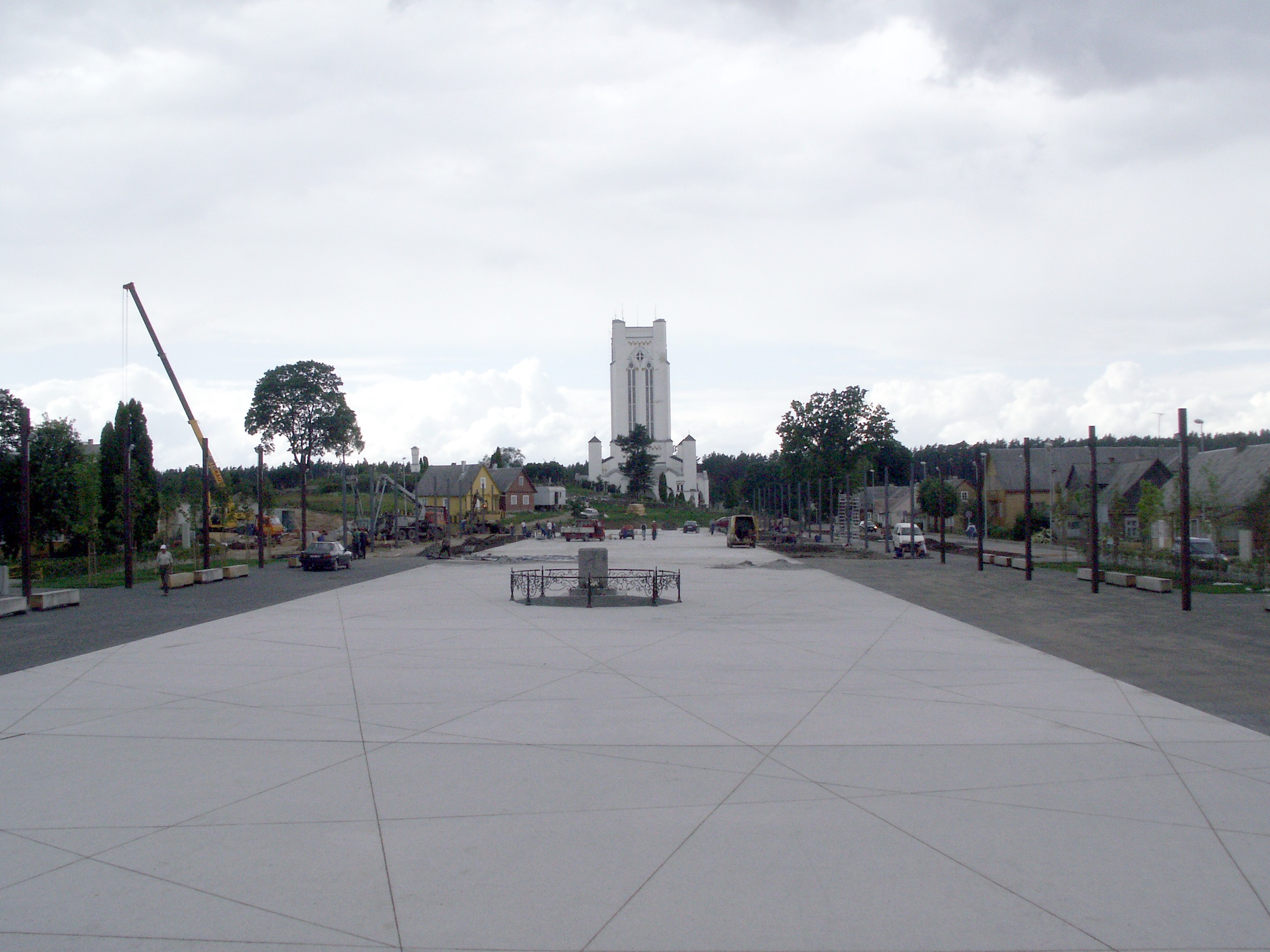
Šiluva, Raseiniai District, Lithuania · 1608
In a Lithuanian field at the height of the Reformation, when the Catholic faith had been all but extinguished in the country, the Mother of God appeared to a group of Calvinist shepherd children, weeping, an infant in her arms. She wept for the church that had stood there once and was no more. Šiluva is the first apparition of the Virgin Mary in Europe to receive the formal approval of the Holy See, and a sign that even when faith seems lost, Mary returns to the place she has loved.
A Mother Weeping in a Field

Throughout the sixteenth century, Lithuania had been turned away from Catholicism by the spread of Calvinism. The old wooden church of Šiluva, built in 1457 in honor of Mary’s Birth, had been abandoned and torn down. The land was Calvinist; the records of the parish were buried in an iron chest beneath the ruins.
In 1608, a Calvinist catechist named Mikolaj Salamon noticed children gathered weeping in the field where the old church had stood. He went out and saw, with his own eyes, a beautiful woman holding a child, standing on a great stone, weeping bitter tears. “Why are you weeping?” he asked her. “Once,” she answered, “in this place, my Son was honored, and now they only sow grain on my soil.”
The vision moved the people; the iron chest was unearthed; the documents proved the Catholic possession of the land. The church was rebuilt; the painting of Our Lady was found in a hiding place where it had been concealed during the Calvinist years. Šiluva became, and remained, a Marian sanctuary at the heart of Lithuania.
The Sanctuary Today

The Basilica of the Birth of the Blessed Virgin Mary at Šiluva enshrines the ancient image and the apparition stone. Beside it stands the great Apparition Chapel built in the early twentieth century, where the stone of Mary’s appearance is venerated. Each September, on the feast of the Birth of Mary, hundreds of thousands of pilgrims gather at Šiluva from across the Baltic for the Šilinės pilgrimage, one of the largest Marian pilgrimages in northern Europe.
During the long Soviet occupation of Lithuania, faith and the Šilinės pilgrimage went underground. Lithuanians prayed at Šiluva even when religion was officially banned. With the fall of communism in 1990, the pilgrimage returned in full. Pope Saint John Paul II prayed at Šiluva on his 1993 visit to Lithuania, and Šiluva remains the spiritual capital of Lithuanian Catholicism.
A Prayer at Šiluva
Mother of Šiluva,
you who wept in a Lithuanian field
where your Son’s name had been forgotten ,
weep over our own forgetting.
Wherever the church has been torn down
and the records buried,
weep until the iron chest is found again.
Mother of nations whose faith has gone underground,
pray for us. Amen.
Live from Šiluva
The Basilica of Šiluva and the Apparition Chapel celebrate Mass and the Rosary daily. Each September, the great Šilinės pilgrimage gathers Lithuanians from across the country and the diaspora.
Visit & Learn More
- Sanctuary of Šiluva (official): siluva.lt
- Wikipedia: en.wikipedia.org/wiki/Our_Lady_of_Šiluva