
Gietrzwałd, Warmia, Poland · 1877
In a small village in Warmia, the country between Germany and Poland that has changed hands many times, the Mother of God appeared in 1877 to a thirteen-year-old girl named Justyna Szafryńska and a twelve-year-old named Barbara Samulowska. She came in their own Polish language, at a moment when Polish was being suppressed by the German imperial government. Gietrzwałd is the only Marian apparition in Polish history to receive Vatican approval, and a sign that Mary speaks the language of every people she comes to.
Our Lady Speaks Polish
On June 27, 1877, Justyna Szafryńska had just been examined by the parish priest in preparation for her First Holy Communion. As she walked home, she heard a sound from the maple tree by the church and looked up to see a Lady seated in the branches in light. She told her mother, who told her to ask the Lady, “Who are you?” The Lady answered: “I am the Most Holy Virgin Mary, the Immaculately Conceived.” Justyna asked, “What do you want?” The answer was: “I wish that you should pray the Rosary every day.”
On the next day, the Lady appeared again, this time to Justyna and to Barbara Samulowska as well. The two girls saw her many times over the next three months, until September 16, 1877. The Lady spoke in Polish, the language the Prussian Kulturkampf was actively trying to extinguish from this corner of Poland. She asked for the recitation of the Rosary, for fidelity to the Catholic faith, and for prayers for vocations. A spring of water rose at the foot of the maple tree.
The apparitions of Gietrzwałd attracted enormous crowds, at one point as many as fifty thousand pilgrims at once. The German authorities tried to suppress the pilgrimage. The Polish faithful kept coming. In 1977, on the centenary, the Polish Bishops formally recognized the apparitions; the Holy See confirmed the recognition. The Vatican’s decree on Gietrzwałd in 2024 reaffirmed it as the only formally approved Marian apparition in Polish history.
The Sanctuary Today

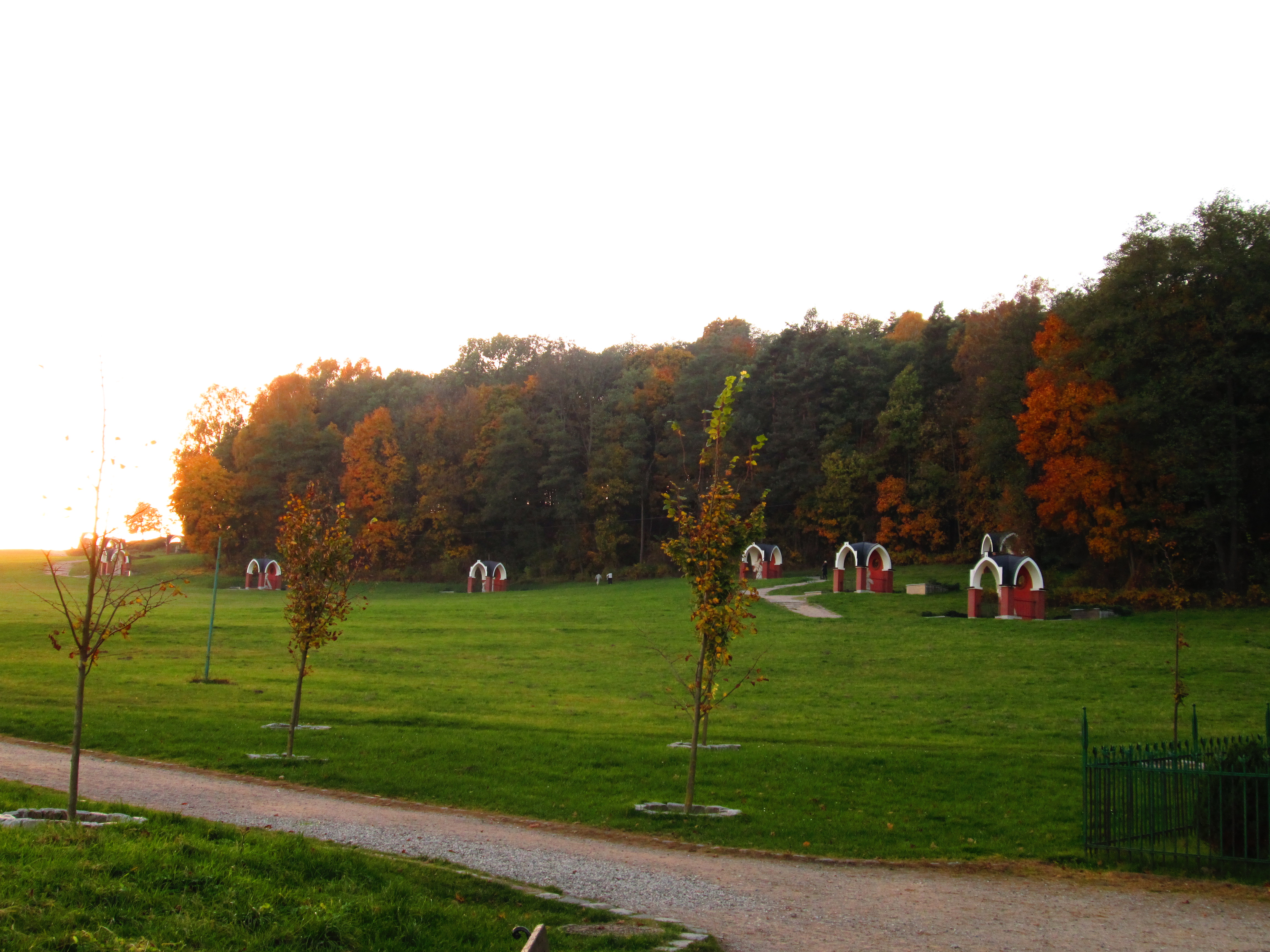
The Sanctuary of the Birth of the Blessed Virgin Mary at Gietrzwałd has grown around the maple tree and the spring. The Basilica is a modest brick building of medieval origin, surrounded by chapels and the open-air spaces where great pilgrim Masses are celebrated. The image of Our Lady of Gietrzwałd, an old Renaissance painting that hung in the church before the apparitions, was crowned by Pope Saint John Paul II in 1977.
Gietrzwałd has become a place of pilgrimage particularly for Polish Catholics seeking to pray for their country and for the Polish family. The Rosary is prayed every day at the maple tree. The spring still flows.
A Prayer at Gietrzwałd
Mother of Gietrzwałd,
you who came to two Polish girls
and spoke their forbidden language ,
speak ours when ours is forbidden.
Wherever a people’s tongue is being silenced,
where a faith is being pressured into hiding,
speak there.
Let your Rosary be prayed in every kitchen and barn
that dares not pray it in the open. Amen.
Live from Gietrzwałd
The Sanctuary of Gietrzwałd celebrates daily Mass and the Rosary at the basilica and at the chapel of the apparition tree. Each summer, particularly on the anniversary of the first apparition, the village fills with Polish pilgrims.
Visit & Learn More
- Sanctuary of Gietrzwałd (official): sanktuariummaryjne.pl
- Wikipedia: en.wikipedia.org/wiki/Our_Lady_of_Gietrzwałd